
Broken Garage Door Spring Phoenix, Safe Next Steps

A broken garage door spring can feel like it happens out of nowhere, usually right when you are trying to leave. If you are dealing with a broken garage door spring in Phoenix, or you are helping family in Las Vegas, Henderson, or Boulder City, the most important thing is to keep everyone safe and avoid making the damage worse.
Here are the safe next steps, what to look for, and when it is time to call a trained technician.
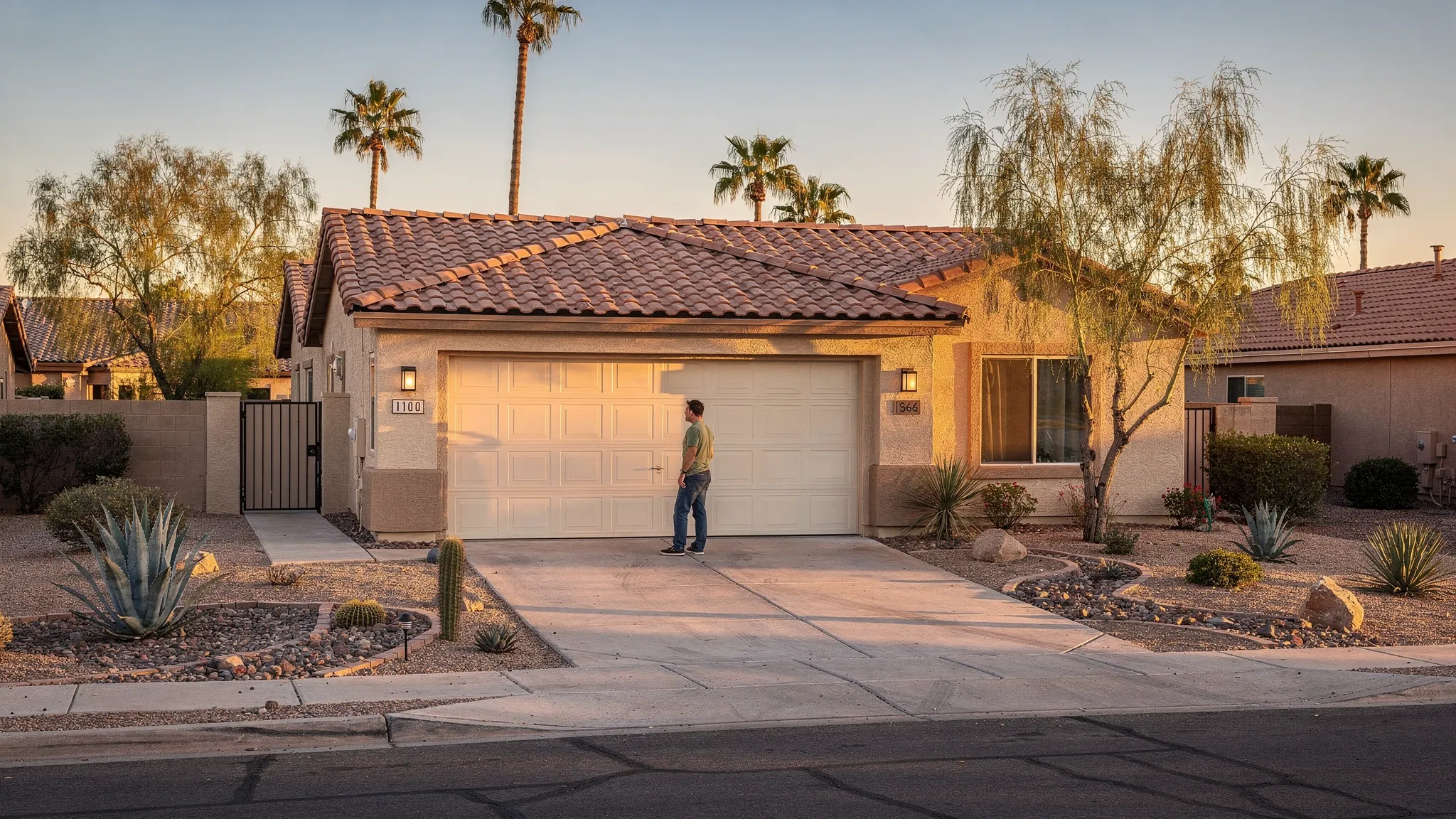
How to tell if your garage door spring is broken
Most homeowners first notice a broken spring because the door suddenly feels “wrong.” The opener might struggle, the door may only lift a few inches, or you may hear a loud bang from the garage (often described like a firecracker).
Here are common signs that strongly point to a spring failure:
- The garage door will not open, or it opens only a few inches and stops
- The door feels extremely heavy if you try to lift it manually
- The opener runs but the door does not move, or it reverses
- You see a clear gap in the torsion spring above the door (a common visual clue)
- Cables near the sides of the door look loose, uneven, or “unwound”
A quick spring refresher (torsion vs extension)
Most homes in Phoenix use torsion springs, mounted on a bar above the door. Some older setups use extension springs, which run along the sides near the horizontal tracks.
Both styles are under high tension. When they fail, that stored energy is released, which is why spring work is not a safe DIY project.
Quick Note: If your door is crooked, off track, or you see a hanging cable, treat it like an urgent safety issue. Keep people and pets away from the door until it is inspected.
Why garage door springs break more often than you think in Phoenix
Springs are wear items. They are designed to last a certain number of open and close cycles, and then they fatigue over time.
In Phoenix and across Arizona, a few local realities can speed up wear:
- Heat and big temperature swings: Garages get hot, and metal expands and contracts over time. That repeated stress adds up.
- Dry, dusty conditions: Dust can work into moving parts and reduce smooth movement, which increases strain on the spring system.
- “Extra cycles” you do not think about: Multiple drivers in the household, school drop offs, errands, or using the garage as the main entry can mean the door cycles far more than expected.
A spring can also break sooner if the door is out of balance, the wrong spring size was installed previously, or the door has additional weight (for example, added insulation) without adjusting the spring system.
Broken garage door spring in Phoenix, safe next steps
When a spring breaks, your goal is simple: prevent injury and prevent secondary damage to the opener, cables, and tracks.
Step 1: Stop using the door
If the spring is broken, do not keep pressing the remote. Many openers have built in safety logic, but they can still strain, overheat, or pull the door crooked.
If the door is closed, it is usually safest to leave it closed.
Step 2: Keep the area clear
A garage door is the largest moving object in most homes. Keep kids, pets, and anyone not involved well away from the door until it is repaired.
Step 3: If the door is stuck open, do not try to “muscle it down”
A door with a broken spring can slam shut or bind in the tracks. If your door is stuck open and you need to secure the home, call for professional help.
Step 4: Disconnect power to the opener if it keeps trying
If someone accidentally keeps hitting the button, unplugging the opener helps prevent additional damage.
Step 5: Take one safe look for obvious clues
Without touching anything, you can check for:
- A gap in the spring above the door
- A cable that looks loose or off the drum
- A door that is hanging unevenly
Photos can help a technician understand the situation faster, but avoid standing directly under the door.
Bold safety reminder: Garage door spring replacement is one of the most hazardous repairs in residential maintenance. If you are unsure, pause and call a pro.
Can you open a garage door with a broken spring?
Sometimes people ask this because a car is trapped inside and they are in a hurry. The honest answer is that it depends on the door, the spring setup, and whether anything else is damaged.
In general, opening the door with a broken spring is risky for three reasons:
- Weight: Many residential doors are heavy enough to cause injury if lifted awkwardly.
- Balance: A broken spring can make the door lift unevenly, which can pull it off track.
- Opener damage: The opener is designed to move a balanced door, not lift a dead weight door.
If you must access a car, the safest option is to call for help. If a technician advises a controlled manual lift, it should be done with the right precautions and enough capable adults, and only if the door is not binding or crooked.
What not to do when a spring breaks
A calm “do not” list prevents most emergency situations from getting worse.
- Do not loosen bolts on brackets, drums, or the spring shaft
- Do not try to wind or unwind a torsion spring
- Do not replace “just one” spring on a two spring system without asking about balance (often both are near the same age)
- Do not cut cables, remove rollers, or attempt track resets while the door is under load
For general homeowner safety habits, Sun City also shares practical guidance on their garage door safety tips.

What a professional spring repair visit typically includes
A good spring repair is not just swapping a part. It is restoring safe, balanced operation so the opener is not overworked and the door moves smoothly.
Most professional spring service involves:
- Confirming the correct spring type and sizing for your door weight and height
- Replacing the broken spring (and recommending the right approach if you have a two spring setup)
- Inspecting cables, drums, bearings, and rollers for wear caused by the failure
- Setting spring tension so the door is properly balanced
- Testing door travel and opener safety features
Why balance matters so much
A balanced door should stay at about waist height when lifted halfway and released carefully. If it drops quickly or shoots upward, the spring tension is not right.
If you want to understand what routine upkeep looks like after the repair, the garage door maintenance tips guide is a helpful next read.
Pro Garage Tip: If your spring broke, schedule a basic tune up after the repair (or at your next convenient window). Small alignment issues and dry rollers quietly add load to the spring every day.
How long can you wait to fix a broken spring?
If the door is closed and you can safely use another entrance, you may be able to wait a short time. But a broken spring is one of those problems that tends to create other problems if the door is forced.
Call sooner if:
- Your vehicle is trapped
- The door is stuck open
- The door is crooked or off track
- You see a loose cable
These are also common reasons homeowners request emergency garage door repair, especially when security is compromised.
Preventing the next spring break (safe homeowner steps)
You cannot prevent spring fatigue forever, but you can reduce unnecessary strain.
Safe, homeowner friendly habits include:
- Listen for new squeaks, grinding, or popping, and address them early
- Keep the photo eyes (safety sensors) clean and aligned so the door does not reverse repeatedly
- Use the wall button, not the remote, when you need to watch the door for changes
If you notice the door is getting louder, slower, or shakier, it is a good time to schedule a professional check rather than waiting for a full failure.
Customer review
“Composite feedback from Phoenix area homeowners: ‘They showed up when they said they would, explained the problem in plain language, and got our door running smoothly again.’”
Related guides
If you want to keep learning, these guides pair well with spring safety and repair decisions:
- Garage Door Safety Tips for Your Home
- Essential Garage Door Maintenance Tips from Sun City Garage Doors
- Should You Repair or Replace Your Garage Door?

Frequently Asked Questions
Is a broken garage door spring an emergency? It can be. If the door is stuck open, crooked, or has a loose cable, treat it as urgent. If the door is safely closed and you can avoid using it, you may have some flexibility, but do not force the door.
How do I know if it is the spring or the opener? If the opener runs but the door barely moves, stops quickly, or feels extremely heavy by hand, the spring is a likely cause. A technician can confirm quickly by checking door balance and the spring condition.
Can I replace a garage door spring myself? It is not recommended. Springs are under high tension, and mistakes can cause serious injury or property damage. For spring work, it is safer to use a trained garage door technician.
What should I do if my garage door spring broke and my car is trapped? Stop using the remote, keep the door closed if possible, and call for help. Trying to lift a heavy door quickly can pull it off track or cause it to drop.
If I have two springs, can I replace only the broken one? Sometimes, but many two spring systems have springs of the same age and cycle life. Replacing one can leave you with an unbalanced system or another break soon after. A technician can advise the safest approach for your specific door.
Will a broken spring damage my garage door opener? It can. If the opener repeatedly tries to lift a door that is no longer counterbalanced, it may strain the motor, gears, or rail. That is why stopping use right away is important.
Conclusion
A broken spring is frustrating, but it is also one of those garage door problems where staying cautious really pays off. If you stop using the door, keep the area clear, and avoid DIY spring adjustments, you will protect your home and everyone in it.
If your garage door spring broke in Phoenix and the door is stuck, uneven, or you need safe same day help, Sun City Garage Door can walk you through the next step and send a technician out with no trip charge. You can start here when you are ready: emergency garage door repair in Phoenix.


.svg)


